
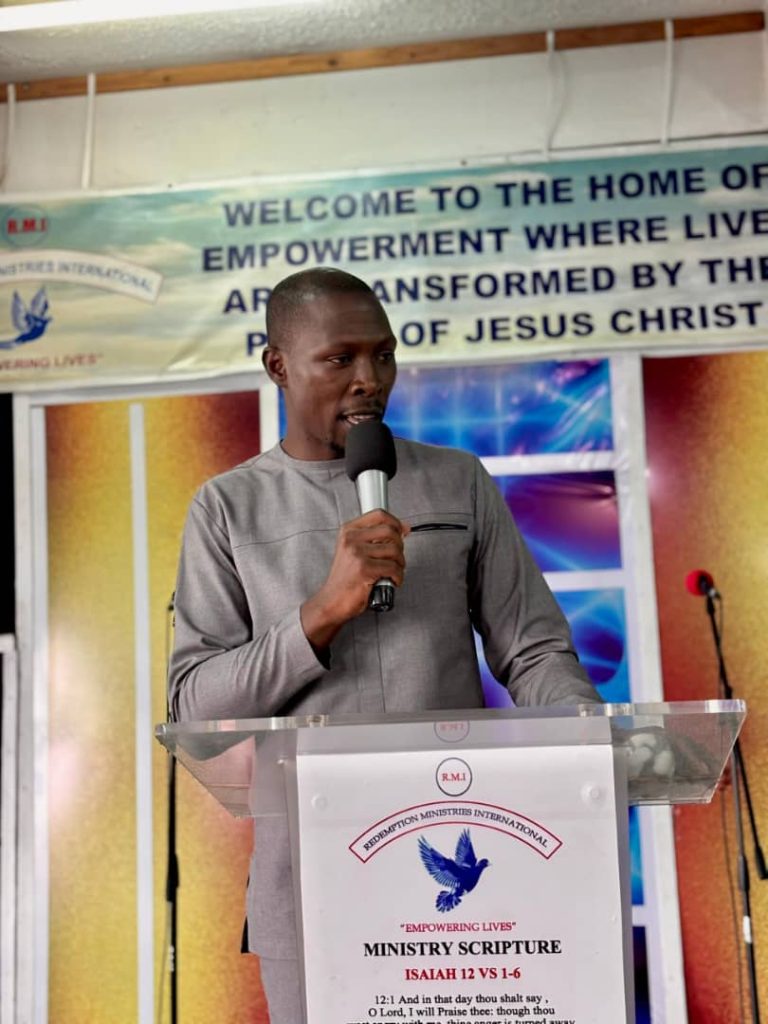
In this sermon, Minister Farera taught that God is the One who creates room—a divine space for His people to expand, progress, prosper, and become fruitful, even when the season is difficult. Using Isaac’s life during a time of famine, Minister Farera emphasized that being blessed and hearing God’s voice does not automatically remove challenges. The famine did not leave immediately, but Isaac’s obedience, persistence, and refusal to fight unnecessary battles positioned him for the Rehoboth experience—the moment where God creates room and removes contention so fruitfulness can follow..
God can speak “Do not move” even in famine
Minister Farera described Isaac’s reality: he was blessed, wealthy, and carried his father Abraham’s inheritance—but the land was in famine. Logically, Isaac would have followed the pattern of his father and moved, especially because he had people, livestock, and dependents who needed water and survival. Yet, in that crisis, Isaac received a clear instruction from God: do not move.
The key lesson was that God’s instruction doesn’t always change the environment immediately, but it positions you to experience God’s provision within the same environment. The famine remained, yet Isaac had both the blessing and the voice of God—and what mattered most was whether he would take heed of that voice.
Scripture : Genesis 26 (famine season and instruction to stay)
Sometimes your provision is already in the land—rediscover what was blocked
Because Isaac obeyed God and stayed, he began to remember something important: his father Abraham had already dug wells in that same land. Those wells had supplied their family in earlier times. But the Philistines later came and stopped up the wells after Abraham’s death. Minister Farera pointed out that the enemy often blocks what God has already provided—especially when it becomes clear it will bless the people of God.
Isaac’s strategy was not to panic. He began to re-dig what had already been dug, reopening the wells and restoring access to what had been buried.
Main Scripture: Genesis 26:18 — Isaac dug again the wells of Abraham.
Many believers are praying for something new while God is saying: restore what was already given, reopen old wells, reclaim spiritual inheritance, and recover what was blocked.
Not every battle is yours—don’t get stuck fighting at “Esek” and “Sitnah”
Minister Farera explained that when Isaac’s servants found water, conflict rose immediately. In a time of famine, the same people who had blocked the wells suddenly wanted to claim the water. Isaac named the wells based on his experience:
- Esek — a place of quarrel/strife
- Sitnah — a place of hostility/accusation/contention
Minister Farera stressed that Isaac had every ability to fight back—he had an inherited army and trained men—yet he chose not to. Instead, he moved on. Minister Farera warned the church not to waste life and destiny fighting for spaces where God is not calling you to remain. Many people get stuck in cycles of conflict, but Isaac’s wisdom was to keep digging forward until he reached God’s appointed space.
Main Scripture: Genesis 26:20–21
Don’t dwell in quarrel; don’t camp in hostility—move forward toward God’s room.
Rehoboth: God makes room so we can be fruitful
Finally, Isaac dug another well and no one quarreled. This was the breakthrough moment. Isaac named it Rehoboth, declaring:
“For now the Lord has made room for us, and we shall be fruitful in the land.”
Scripture: Genesis 26:22
Minister Farera taught that “room” is more than physical space. It represents divine expansion: opportunity, progress, influence, stability, peace, and freedom from constant contention. The message highlighted that fruitfulness becomes possible when God creates room—because the pressure, attack, and blockage that hinder growth are removed.
Key takeaway: When God creates room, progress becomes possible, and fruitfulness follows.
Don’t choose your own “room” like Lot—wait for God to create it
Minister Farera warned against self-selected space and used the example of Abraham and Lot. Their herdsmen quarreled because they were fighting over space and greener pastures. Abraham refused to fight and allowed Lot to choose first. Lot chose the plains of Sodom and Gomorrah because it looked fruitful on the surface—yet it carried spiritual filth and eventual destruction.
Abraham, however, waited for God’s direction, and God told him to look north, south, east, and west—declaring the land would be his. Minister Farera emphasized: when God creates room, it comes with blessing and protection. When you create your own room, you may enter a place that looks good but destroys you later.
Scripture: Genesis 13:5–9
Lesson: Don’t fight for “Sodom-looking” opportunities. Wait for God’s room—His space brings peace and longevity.
Pray the prayer of Jabez: “Enlarge my territory”
Minister Farera connected Rehoboth to Jabez’s prayer. Jabez was born in pain and named out of sorrow, yet he refused to let his label define him. He prayed for God to bless him, enlarge his territory, keep His hand upon him, and remove pain.
The sermon highlighted that “room” is not only a bigger house—it is expanded influence, greater capacity, and wider territory for impact. When God enlarges you, you are no longer squeezed, limited, or constantly struggling for space.
Scripture: 1 Chronicles 4:9–10
Your past name doesn’t define your future—God can enlarge you.
Room can come with restoration—even when something is lost while expanding
Minister Farera encouraged believers not to fear growth because expansion can sometimes come with loss. Using the story in 2 Kings, the sons of the prophets sought to enlarge their place, borrowed tools, and while cutting wood, an axe head fell into water. Minister Farera emphasized: God did not rebuke them for expanding—He restored what was lost.
The message was clear: While obeying God and creating room, you may lose something—but God can recover and restore what should not be lost.
Scripture: 2 Kings 6:1–7
Lesson: God supports expansion—and He restores what falls along the way.
Reflection: Do not settle—keep digging and press into greater works
The sermon closed with a strong call: don’t settle at Esek or Sitnah. Keep digging. Don’t stop seeking God because of contention, hardship, or pressure. Minister Farera urged the church to pursue more than “business as usual,” and to believe God for greater works.
Jesus Himself spoke about “rooms” in the Father’s house and promised believers would do greater works. Minister Farera connected this to spiritual maturity—each season and group grows in its own “room,” and believers must refuse to remain stuck in the same level.
Scripture: John 14:2 — “In My Father’s house are many rooms…”
Scripture: John 14:12 — “Greater works than these…”